
One-Stop Footwear Sourcing: Why Global Buyers Work with Multi-Category Slipper Suppliers
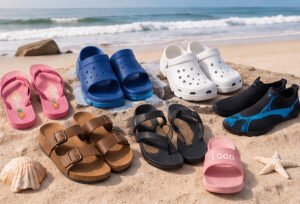
International footwear sourcing can become complicated very quickly. A buyer may need flip flops from one factory, EVA slippers from another, clogs from a third
When sourcing slippers in bulk, one of the first decisions buyers need to make is the material.
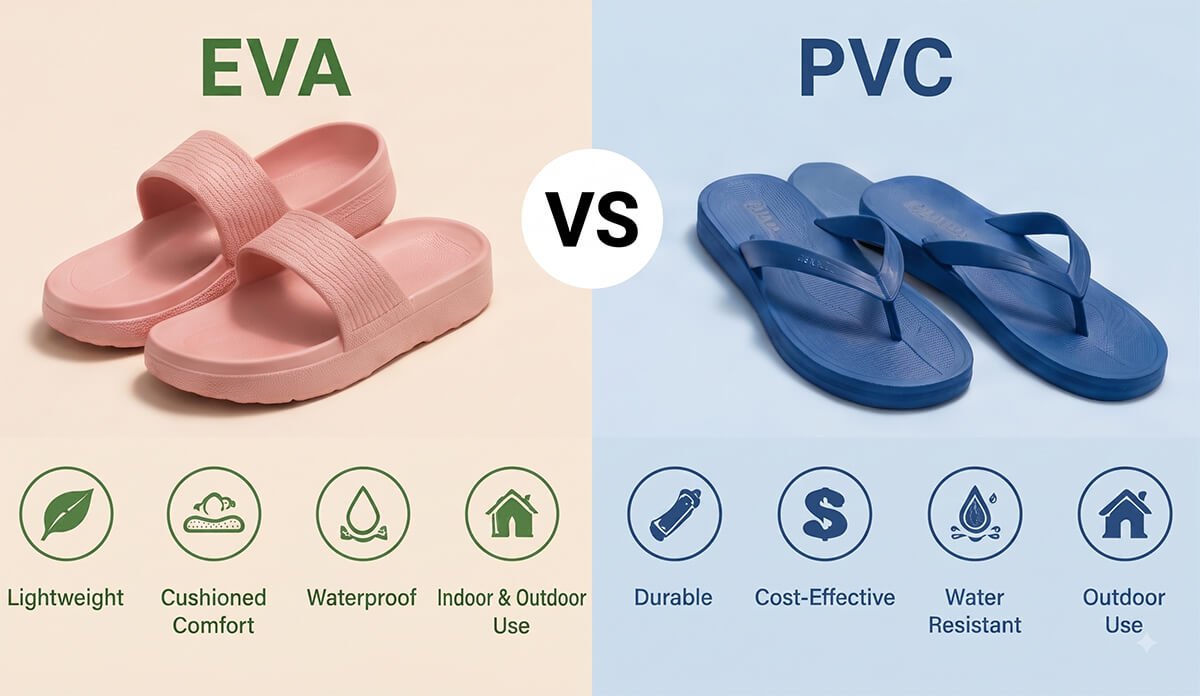
Two of the most common choices are EVA and PVC. Both materials are widely used for casual footwear, but they are suitable for different product positions and customer needs.
Choosing between EVA and PVC should not be based only on price. Wholesale buyers should also consider comfort, product weight, water resistance, appearance, end-use scenarios, customization and target retail price.
Two Slippers supplies both PVC flip flops and multiple EVA footwear categories, including EVA slippers, EVA sandals, clogs and slides.
This guide explains the practical differences between EVA vs PVC slippers from a B2B sourcing perspective.
EVA stands for ethylene-vinyl acetate. In footwear, it is widely used for lightweight soles and one-piece molded slipper designs.
According to Two Slippers’ product information, its EVA slippers use high-density elastic EVA material and are designed to be lightweight, waterproof, quick-drying and easy to clean. The material also provides cushioning and shock absorption.
EVA is therefore commonly suited to products such as:
Because EVA can be molded into many shapes, suppliers can create different sole profiles, textures and upper structures.
PVC, or polyvinyl chloride, is another common material for affordable footwear.
Two Slippers describes its PVC flip flops as water- and abrasion-resistant with a sturdy one-piece construction, secure toe post and textured outsole. The company also highlights cost effectiveness, easy cleaning, durability and customization for promotional projects.
PVC is especially common in:
For price-sensitive markets, PVC can provide a practical balance between durability and cost.
EVA is known for being very lightweight.
This can make EVA slippers comfortable for daily wear and convenient for travel. Lightweight products can also be attractive for retailers selling casual summer shoes.
Two Slippers specifically positions its EVA products around ultra-lightweight comfort.
PVC products can feel denser depending on the formulation and design.
For buyers prioritizing a soft and light wearing experience, EVA is often the stronger choice.
Comfort is one of EVA’s main advantages.
EVA foam can provide a soft, resilient feel underfoot. Two Slippers highlights cushioning, shock absorption and a cloud-like walking experience in its EVA product description.
PVC flip flops are often more focused on everyday durability, water resistance and value.
Therefore, the right choice depends on your market.
For comfort-focused retail collections, EVA may be better.
For simple and affordable beach or promotional footwear, PVC may be more suitable.
Both EVA and PVC are suitable for wet environments.
EVA is described in the Two Slippers material as waterproof, quick-drying and non-absorbent.
PVC flip flops are also described as water-resistant and easy to clean.
This makes both options useful for:
The final choice should therefore depend on the overall product design and target customer rather than water resistance alone.
EVA is highly suitable for molded footwear.
Buyers can source:
Two Slippers’ EVA sandal range includes slip-on, slide and multi-strap structures using soft and resilient EVA foam.
PVC flip flops usually use a more traditional sole-and-strap structure, although colors, prints and logos can still be customized.
Both materials can support private label programs.
For PVC flip flops, customization can include:
Two Slippers specifically lists logo customization as part of its PVC flip flop offering.
For EVA slippers, customization may focus more on molded shape, color combinations, textures and branding.
Buyers should ask whether an existing mold can be used or whether a new mold is required.
New molds may increase development cost and MOQ, while existing designs can often support faster sampling.
PVC slippers are often suitable for buyers looking for:
EVA slippers may be better for:
Your target selling price should be decided before product development begins.
If the retail price is low, the supplier may recommend a simpler structure.
If the buyer wants a more premium product, thicker EVA, special color combinations and more detailed molds may be considered.
There is no single answer.
Choose EVA slippers when your priority is lightweight comfort, cushioning, modern molded shapes and casual lifestyle positioning.
Choose PVC flip flops when your priority is simple construction, competitive pricing, water resistance, easy maintenance and promotional customization.
Many wholesalers should consider carrying both.
Different materials can serve different customer groups and price levels.
For example, an importer could develop:
This creates a broader product portfolio without relying on one material.
Before placing a bulk order, request clear information about:
Two Slippers reports access to more than 30,000 SKUs and over 300 qualified factories, giving buyers a wide sourcing base for comparing materials and styles.
The choice between EVA vs PVC slippers depends on your market, product positioning and budget.
EVA is well suited to lightweight, cushioned and modern casual footwear. PVC works well for durable, easy-to-clean and cost-effective flip flops.
For B2B buyers, the best approach is to define the target customer first and then select the material that supports the expected retail price, comfort level and product design.
Suggested CTA:
Need help choosing between EVA and PVC slippers? Send us your target market, quantity, price range and design requirements. We can recommend suitable slipper styles for wholesale, OEM or private label sourcing.
International footwear sourcing can become complicated very quickly. A buyer may need flip flops from one factory, EVA slippers from another, clogs from a third
Choosing the right slippers manufacturer is an important decision for wholesalers, distributors, retailers, supermarkets and private label brands. The supplier you choose does more than