
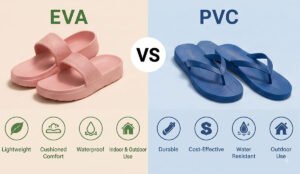
EVA vs PVC Slippers: Which Material Is Better for Wholesale Buyers?
When sourcing slippers in bulk, one of the first decisions buyers need to make is the material. Two of the most common choices are EVA
International footwear sourcing can become complicated very quickly.
A buyer may need flip flops from one factory, EVA slippers from another, clogs from a third supplier and water shoes from a completely different production base. Each supplier may use different payment terms, sampling procedures, quality standards and production schedules.
For importers, wholesalers and retailers, managing many suppliers can require significant time.
This is why one-stop footwear sourcing can be attractive to B2B buyers.
Instead of purchasing each footwear category independently, buyers work with a sourcing partner that can match products to qualified factories, coordinate samples, manage quality and combine multiple categories within one purchasing program.
Two Slippers states that it integrates more than 300 qualified factories and offers over 30,000 footwear SKUs, with OEM/ODM support and service covering more than 100 countries and regions.
One-stop footwear sourcing means working with one main supplier or sourcing organization for several stages of the buying process.
These stages may include:
The objective is not simply to have more products.
The real value is to reduce the number of separate processes the buyer needs to manage.
Different markets need different footwear.
A supermarket may need low-cost flip flops.
A fashion retailer may want colorful EVA slides.
A resort buyer may need beach sandals.
An outdoor distributor may want aqua shoes.
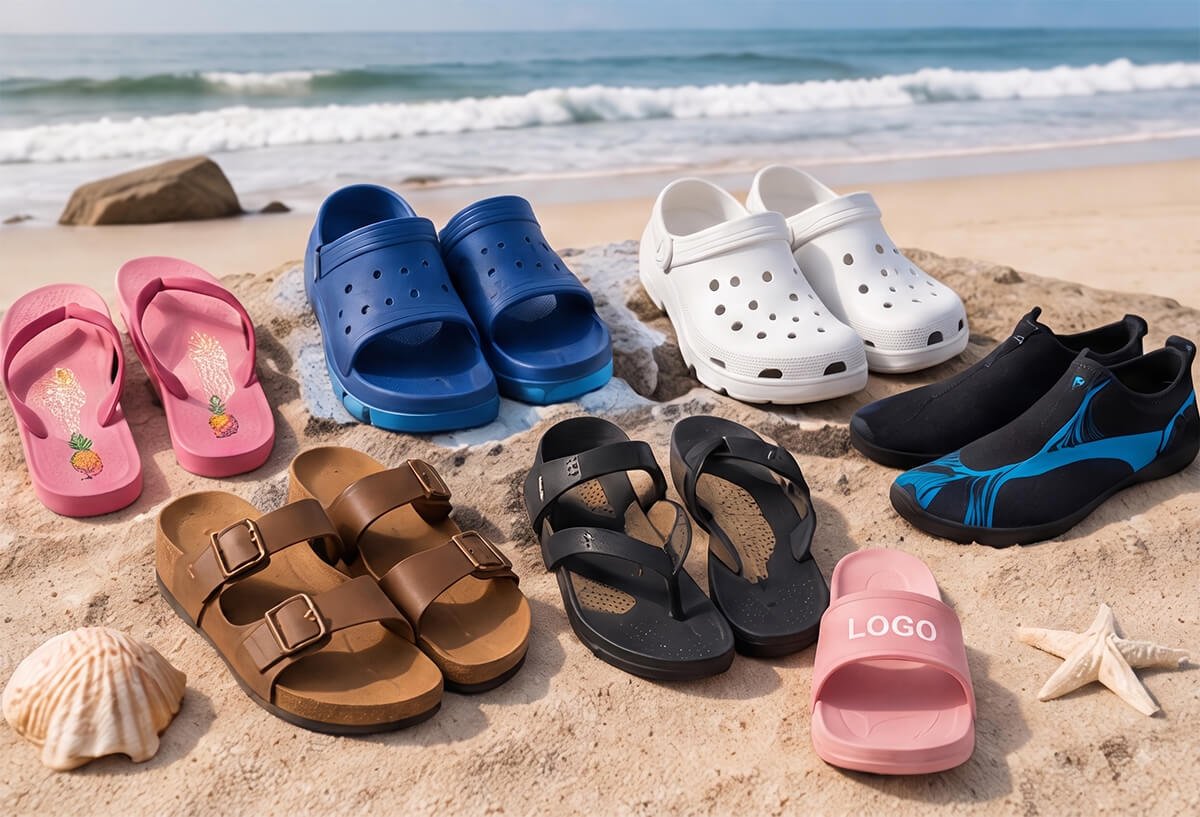
Two Slippers’ supplied product material includes PVC flip flops, EVA slippers, EVA sandals, clogs, slide series, cork-footbed sandals, beach sandals and aqua shoes.
This variety can help buyers build a more complete product assortment through one sourcing channel.
A multi-category supplier is particularly useful when a buyer wants to launch several related collections in the same season.
Finding products is often one of the slowest parts of sourcing.
Buyers may spend days searching online, contacting factories and comparing catalogs.
A large showroom can make the process more efficient.
Two Slippers operates a professional showroom of more than 200 square meters and states that it displays more than 30,000 SKUs covering EVA and PVC slippers, sandals, aqua shoes, casual shoes and sports shoes.
The company also says its displays are updated monthly according to global fashion trends and overseas market preferences.
For a B2B buyer, this creates an opportunity to compare many styles in one place instead of visiting multiple factories.
Private label customers often need more than existing products.
They may want to change:
A sourcing partner with access to multiple factories can match a project with a factory that specializes in a particular production process.
For example, a basic PVC flip flop and a molded EVA clog may require very different manufacturing resources.
One supplier does not necessarily need to produce everything in the same factory.
Instead, the sourcing organization can coordinate different qualified factories while giving the buyer one main communication channel.
Order quantity is a major concern for new brands and smaller distributors.
Two Slippers lists flexible production starting from a MOQ of 500 pairs.
This can make product testing easier than very large minimums, although buyers should still confirm the exact MOQ for each style, color and customization.
A practical sourcing strategy is to begin with proven designs and moderate quantities.
After sales data becomes available, buyers can increase order volume or develop more customized molds.
Quality control can be more difficult when a buyer works with many independent factories.
Different factories may have different inspection standards.
A sourcing partner can help establish one common quality requirement across several suppliers.
Two Slippers states that it uses strict QC processes and follows third-party quality inspection systems such as SGS. Its materials also reference GRS, BSCI, Disney authorization and factory audit requirements connected with major international retail supply chains.
For individual projects, buyers should still define measurable inspection requirements.
These may cover:
Centralizing these requirements can improve consistency.
Imagine a distributor preparing a summer footwear collection.
The order may contain:
Managing five separate suppliers means managing five different sample schedules, quotations, invoices and production plans.
With a one-stop sourcing model, the buyer can coordinate these categories through a single partner.
This may simplify communication and make product assortment planning more efficient.
Footwear trends can change from season to season.
Colors, sole shapes and casual styles may become popular quickly.
Two Slippers says its showroom products are refreshed monthly in response to overseas market preferences.
For wholesalers and retailers, access to frequently updated styles can support faster product selection.
Buyers can review new products, choose promising models and customize them for their own market.
This is especially useful for customers that need to release new collections several times per year.
This model can be especially useful for:
They often need multiple styles and price levels for local wholesale customers.
They may require high-volume products, stable quality and a wide seasonal assortment.
They need customization and product development support.
They often need fast access to new designs and manageable order quantities.
They may need low-cost customizable flip flops for events, resorts and branded campaigns.
Before choosing a partner, buyers should ask several questions.
How many footwear categories can the supplier provide?
Does it have experienced factories for each category?
Can it support OEM and ODM?
How are samples managed?
What is the MOQ?
How is quality controlled?
How often are new products developed?
Can the supplier support larger orders in the future?
Can different products be coordinated under one sourcing project?
These questions help determine whether the supplier truly offers an integrated service or simply presents a large catalog.
One-stop footwear sourcing can simplify procurement for global distributors, retailers, wholesalers and private label brands.
The main benefit is not just a larger selection. It is the ability to coordinate product selection, factory matching, customization and quality control through one sourcing partner.
Two Slippers’ model combines access to 300+ qualified factories, more than 30,000 SKUs, OEM/ODM services and a 200+㎡ product showroom.
For B2B buyers building multi-category footwear programs, this approach can provide a more flexible and efficient path from product idea to bulk order.
Suggested CTA:
Looking for slippers, sandals, clogs or aqua shoes from one sourcing partner? Tell us your target market, product categories, quantity and price range, and we can help match suitable styles for your next wholesale or private label program.
When sourcing slippers in bulk, one of the first decisions buyers need to make is the material. Two of the most common choices are EVA
Choosing the right slippers manufacturer is an important decision for wholesalers, distributors, retailers, supermarkets and private label brands. The supplier you choose does more than